Blog
In the beginning of this year I quit my software engineering job to become a full-time freelancer. As I did not have any clients lined up I am always looking for more work opportunities. While commercially I develop software solutions for small to medium businesses, I would love to eventually do more nonsensical artistic projects.
This is the story of such a a creative project. It is a fun story that contains Asteroids, Projectors, and Math.
It all started when I noticed a local subsidy from my municipality. The goal was to give the night life of The Hague an “impulse”. Apparently they think that the city is too boring between 00:00 and 06:00.
While reading through the subsidy, something caught my eye. It listed categories of art and I saw the usual suspects: Music, Movies, Dance, but the final category was Games. Which is amazing, I did not know that the government was aware of the existence of videogames!
Now I have been making games for years now and releasing them for free. But this was my chance to instantly become a professional game developer on a technicality! I could design an experience that is playable right there on the street.
It provides an interesting way to design a game. Usually you come up with some game mechanics that you wrap in a story. But now we are designing with an experience in mind.
So with this experience angle I came up with the following requirements:
- The game can be played by everyone who walks passed it on the the street. It should be intuitive and easy to play, so controls must be simple.
- Players should be able to leave and join without impacting the flow of the game. This means that something like teaming up players is not possible, as the members of one team could leave all of a sudden.
- There should also not be any waiting time or “rounds” as people might not have the patience to stick around until the next event. Remember I am asking people to stay on the street, in the cold, at night.
The idea
With all these experience constraints in mind, all that is left is to come up with an actual game idea. I was inspired by a trend of web games from a while ago: The .io genre. Most famously agar.io. In this game you are a blob of agar, eating smaller blobs until you grow big and strong. You can also eat other players, killing them in the process and absorbing their power. This naturally leads to a leaderboard where you can see who has the most mass. Making your first appearance in the top 10 is a fun moment. And reaching the top doubly so.
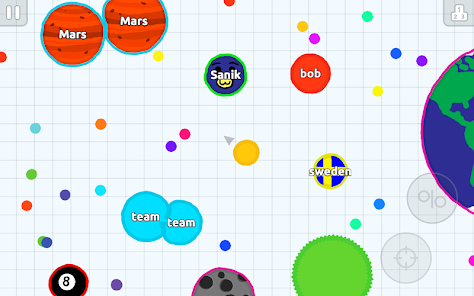
These mechanically simple games where you are competing against strangers on a leaderboard are the perfect fit for what I’m trying to achieve!
Requesting the subsidy
Armed with a great idea, it’s time to convince the government that I am so awesome they should give me money. The rules mentioned that they had a certain budget available, and they would process requests in order of arrival. Pitching and sales has never been my strong suit, so this part took a lot of time. It was especially stressful feeling like spending just one hour more on it could be the difference between getting or not getting it. So why not spend another hour, and another hour.
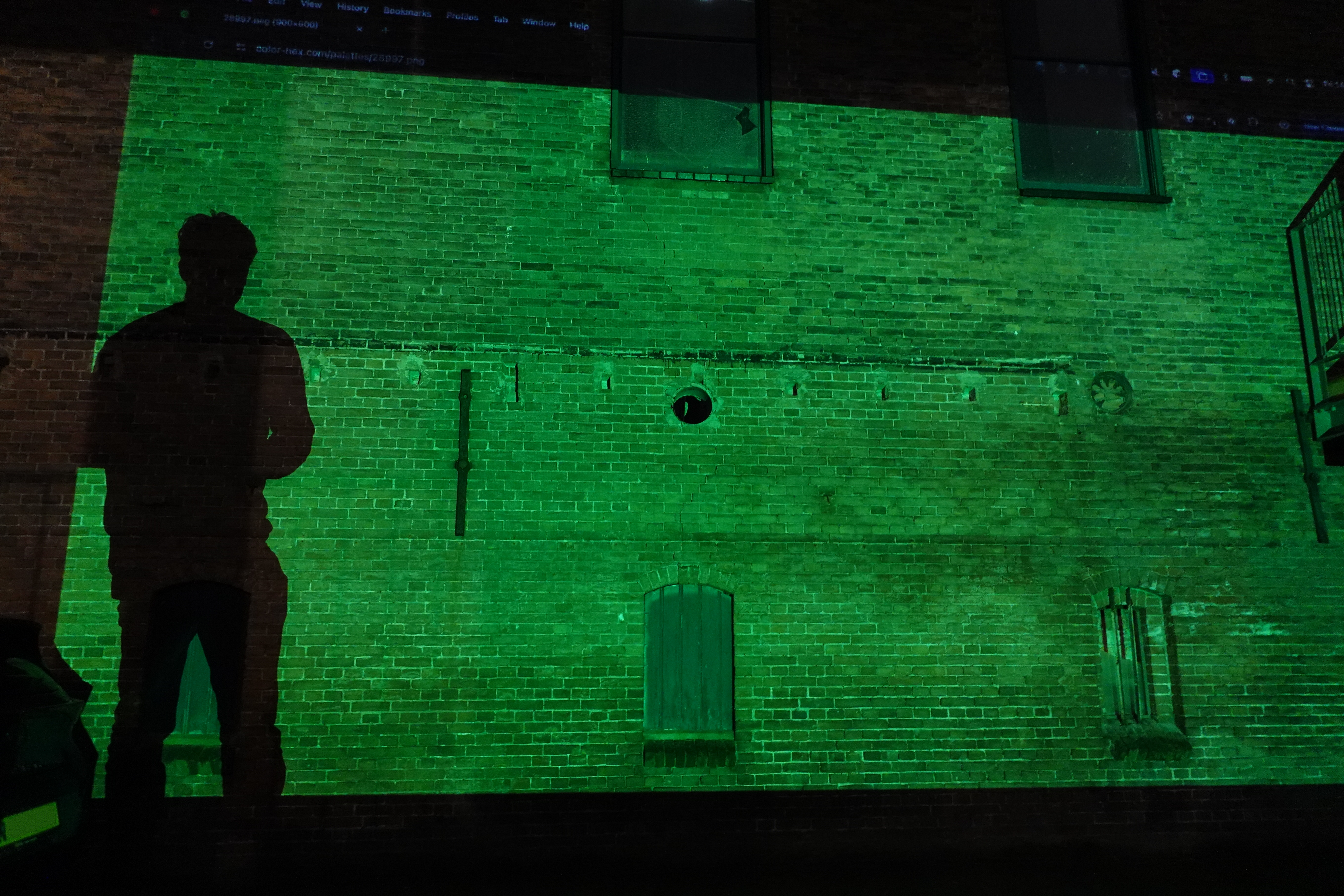 Testing whether my projector works outside (it does)
Technical demo
With my subsidy requested, I wanted to make a small technical demo to see if my ideas were even feasible. For example how passersby can instantly connect to a game server, how the game should scale with few or many players, or what visuals would work on a large projected screen.
I quickly threw together a clone of asteroids in Godot. Players control a rocketship flying through space. It moves forwards automatically and you can press left and right to aim your ship towards other players, shooting them to destroy them! This nets you a point to climb the leaderboard, and also scales up your ship by 10%. Because I was lazy and increased the scale of the entity, this not only makes you bigger but also move faster. Initially this gives you a nice advantage, but after about 5 kills you are such an easy target that anyone can take you down, providing an interesting game loop.
For this technical demo I required players to connect to the same wifi network that the game server is hosted on, while for the real event I will be using a proxy.
I spend around one day on the demo as the project was not confirmed yet. I probably shouldn’t have spend time on it at all, but I got too excited!
First playtest
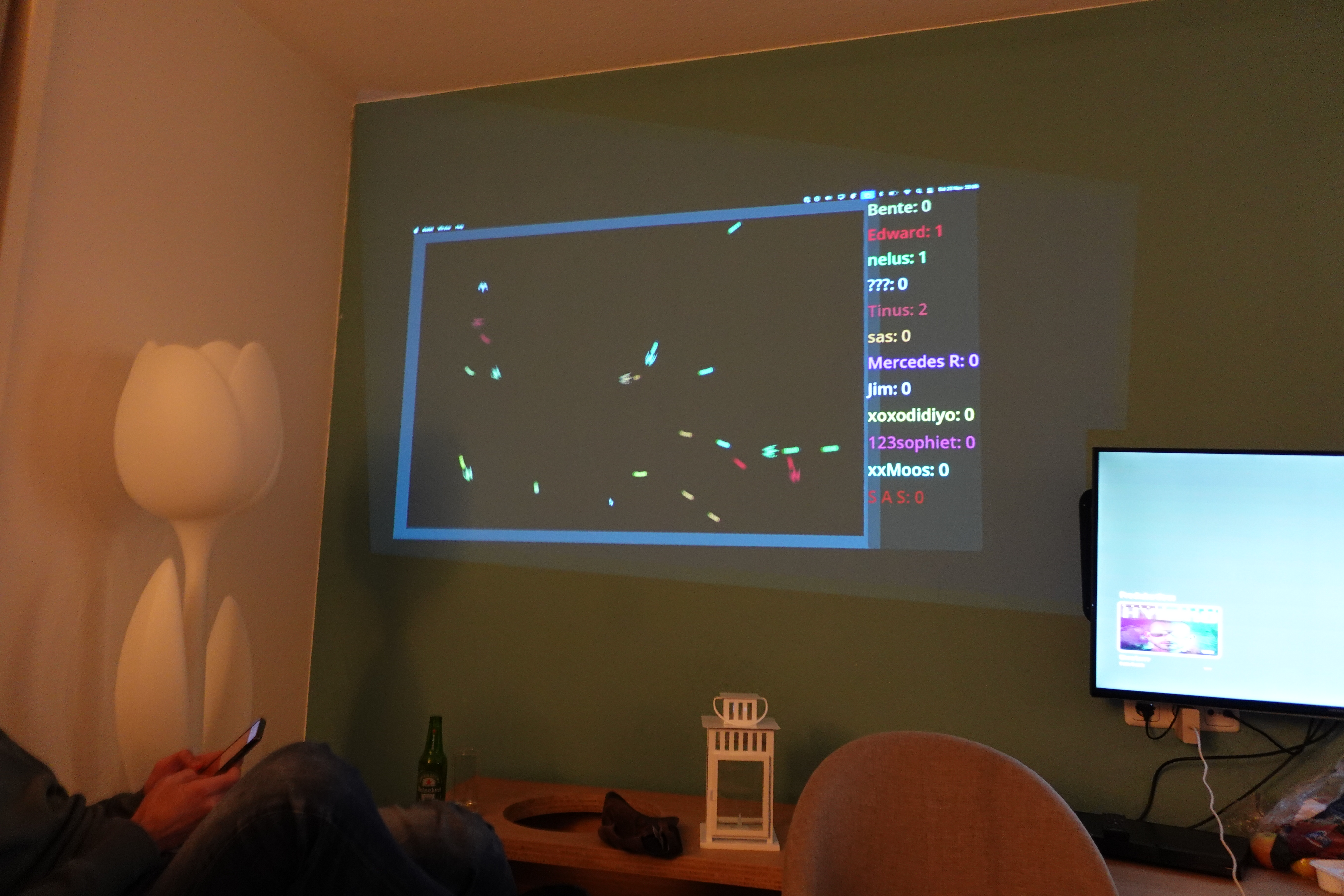
The big lessons learned were:
- It was quite difficult to identify where you are, as you respawned in a different location after death
- People really want to know who they killed so they can make fun of them. Screwing over your friends is a core part of the experience
- The game did not scale to >12 players. In real life this probably won’t be a problem.
A fortunate letter
A couple weeks later I got a letter. When I opened it, it was great news! The subsidy had been granted and I could start my project. With joy and elation I started planning the next few steps. There was a lot of work ahead. Designing the actual game, developing it, finding a location and a date.
Game (re)design
With the results from the playtests, I completely redesigned the game. The most important added requirement was that your character should not disappear, as finding it in the chaos was too difficult. I also wanted to improve the visual clarity of the game, making it something that people would immediately recognise from a distance.
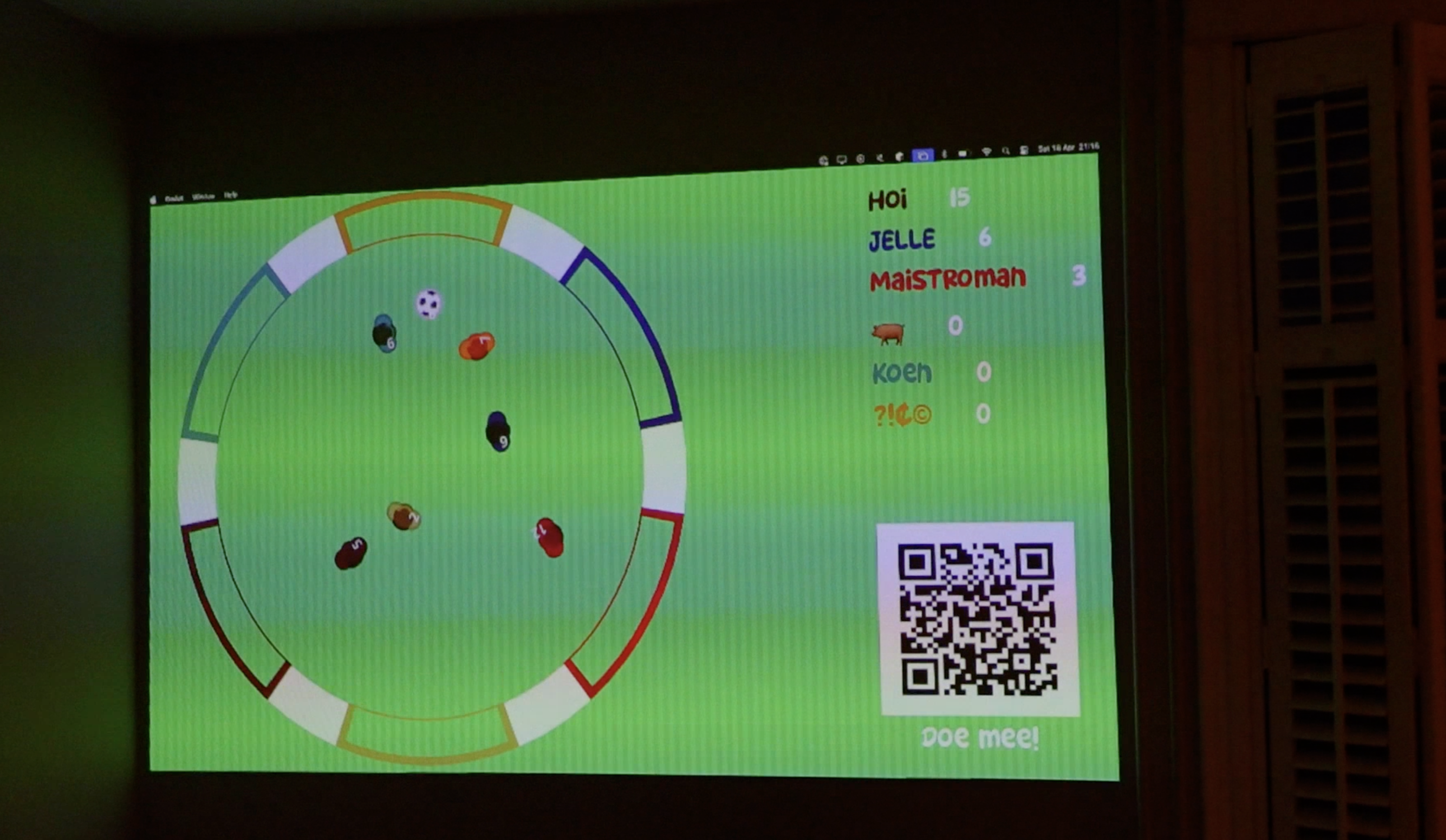
With this I had the idea of a soccer game. You would control a character on a circular soccer field. Every player’s goal would span a part of the circle. As people joined and went, the circle could resize to fit the new amount of players. This took some math to get right, and definitely did not work the first time.
But eventually I got it working nice and smooth. Even though the goals moved, it was still easy to match your name and color to the goal belonging to you.I then added some mechanics for giving and losing points, a notification when you scored, and created a quick frontend in Svelte that would show up on your phone when scanning the QR code.
After 2 more playtests and iterations, the end result was simple yet fun and familiar for most people.
Making a “product”
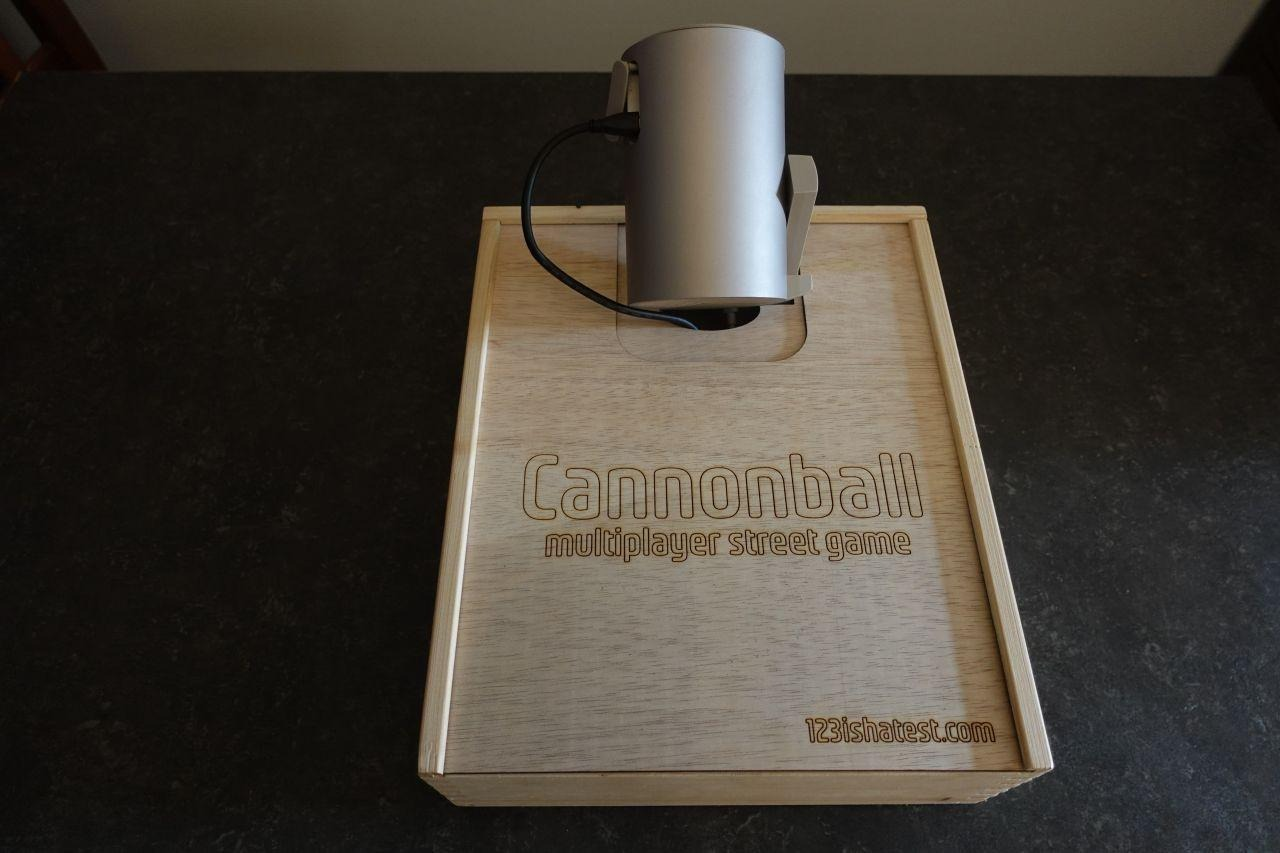
I have made many weird things over the years. The amount of times that I have balanced a Raspberry PI and a bunch of wires while digging through boxes to find a backup cable is more than I can count. I wanted to turn this project into a single, physical thing that you can take anywhere, plug it in and it just works!
So I made a box out of an old wine casket. Designed a lid that would perfectly encapsulate the projector using FreeCAD and math.
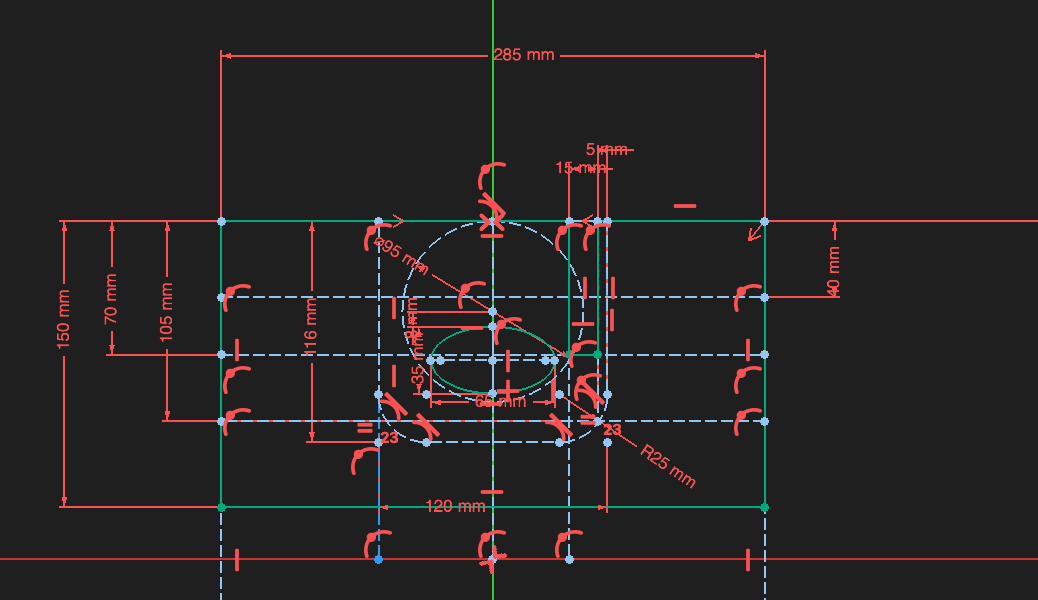
In the end it turned out really nicely. All you need to do to get it to work is plug it in. The server and the game launch by themselves!
These electronics will never leave this box again. I can bring it with me to any occasion where people might want to organize a street game. (This can be your event, contact me!)
The event
I have to admit I was quite nervous the evening of the event. Normally I make a game, throw it on the internet for the world to see, and don’t add analytics so I have no way of knowing whether it is a success. But now I had to stand there next to it, presenting my work to the world in a public manner. It could fail, nobody could play it and they could think I am an idiot for making something bad.
I had invited some friends to help me setup and provide a steady base of players. This was great as I could ask them to recruit strangers to join in, and play as well or as poorly as the situation demanded.
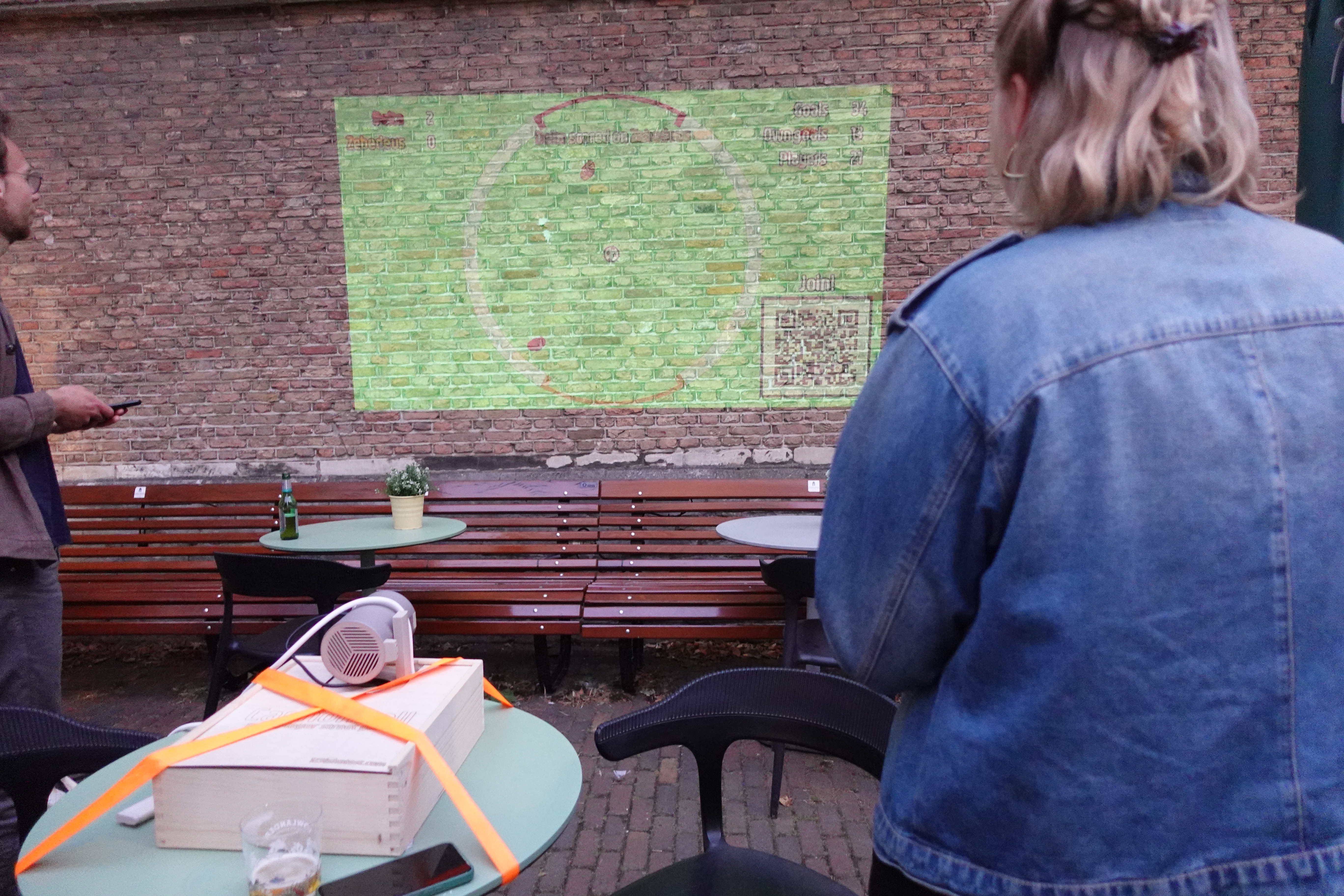
I had set up my projector around 21:30 in the city center while it was still light outside. This gave us plenty of time to prepare everything. Quite quickly, nearby people noticed that we were doing something interesting, and asked what it was about.
At first, most people were sceptical, thinking I was trying to sell them something. When I told them I just made something for fun, their attitudes changed completely.
So my new opener became “Do you want to play this fun game that I made?” which got great responses such as “Cool!”, “How?”, or “Why?”
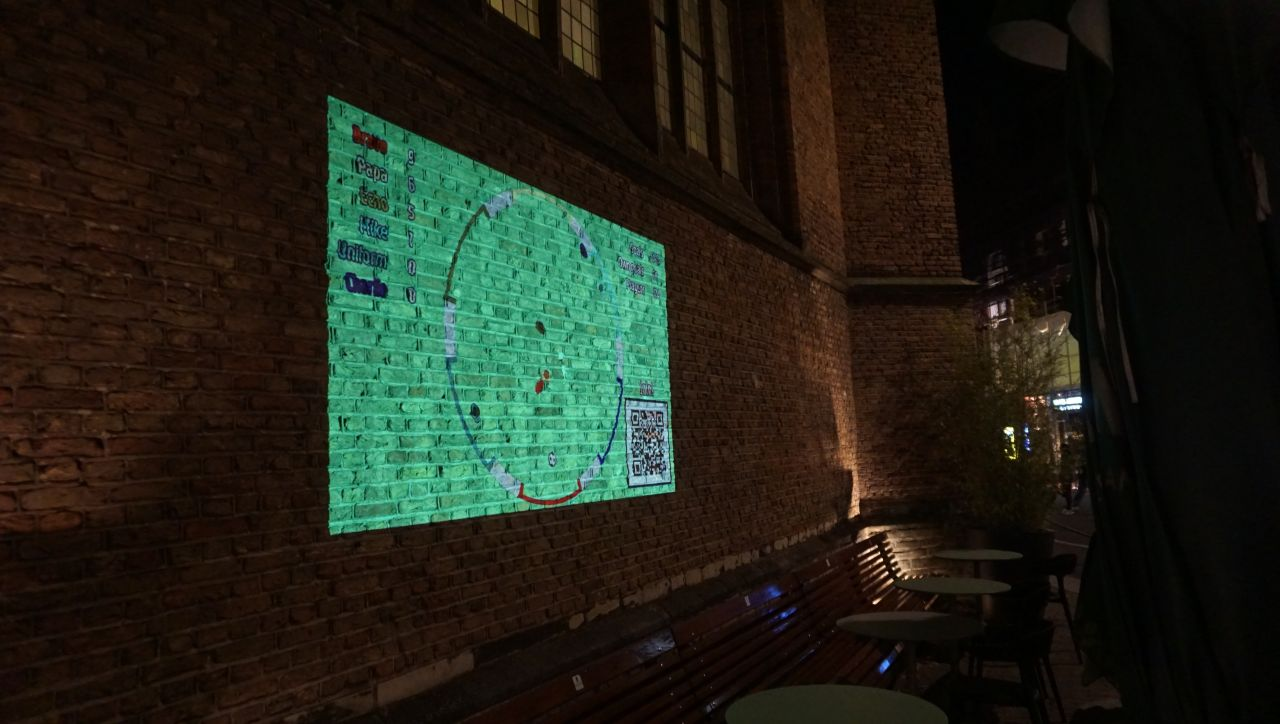
It was amazing to watch people interact and enjoy something I’ve worked so hard on. Some people stayed for up to 20 minutes playing and having fun. It was very rewarding!
Overall, the game was played by about 200 players, scoring around 800 goals
Reflection
Overall I am incredibly content with how this project turned out. This is the first time I’ve done something of this scale this publicly, and I was blown away by the amount of positive feedback I’ve gotten.
I will definitely host more events in the future, and I hope to see you there!
Thank you for reading,
Isha